• myMalay
    • enEnglish
    • cnChinese
  • MYR
    • MYR
    • RMB
    • USD
  • Login
  • Home
  • Shop
    • Browse Our Products
      What’s new in?
      • Bearing
      • Linear Motion

      Top Best Sellers

      4. Feiken Cylindrical Roller Bearing

      NU203ECM
      Cylindrical Roller Bearing
      17x40x12

      RM52.00 RM46.80
      5. Feiken Tapered Roller Bearing

      30202
      Tapered Roller Bearing
      15x42x14.25

      RM30.50 RM27.40
      6. Feiken Spherical Roller Bearing

      22205CA/W33
      Spherical Roller Bearing
      25x52x18

      RM126.60 RM113.90
      6. Feiken Spherical Roller Bearing

      22206CA/W33
      Spherical Roller Bearing
      30x62x20

      RM128.50 RM115.60
      1. Feiken Deep Groove Ball Bearing 2RS

      6001-2RS
      Deep Groove Ball Bearing
      12x28x8

      RM6.80 RM6.20
      1. Feiken Deep Groove Ball Bearing 2RS

      6002-2RS
      Deep Groove Ball Bearing
      15x32x9

      RM7.10 RM6.40
      view all
  • About Us
  • Blog
  • Contact Us
  • Careers

My Cart -

RM0.00
0
There are 0 item(s) in your cart
Subtotal: RM0.00
View Cart
Check Out
  • Home
  • Archives for Saiful Izzuddin

Author Archives: Saiful Izzuddin

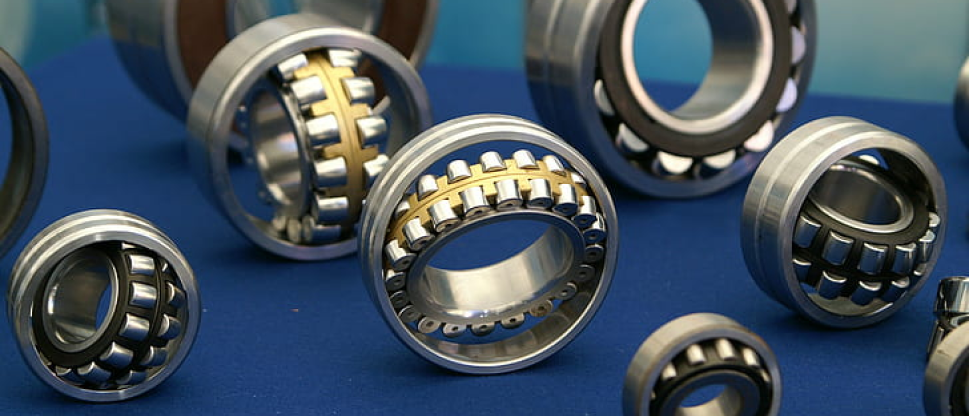
6 Different Types of Ball Bearing Materials

Post By: Saiful Izzuddin January 15, 2022 0 Comment

SIX DIFFERENT TYPES OF BALL BEARING MATERIALS

Steel is commonly used for both the rolling component and the rings in roller bearings and ball bearings. Other properties, such as higher corrosion resistance, porosity, cost savings, seizure resistance, lightweight materials, and high durability, are required in various industrial applications.

FEIKEN Bearing, being Malaysia’s preferred bearing supplier, knows everything about obtaining the correct bearing components and materials for your machine.

1.0 Carbon Steel

Carbon steel, sometimes known as ‘commercial grade,’ is not stainless steel and contains up to 2.1 percent carbon by weight. The stronger the bearing, the higher the carbon concentration. However, it becomes less ductile, has a lower melting point, and is unable to handle big loads or at fast speeds as a result of this. Carbon steel bearings have several advantages, including being the cheapest bearing material and being extremely hard. Carbon bearings are typically found in rolling drawers, locks, bicycles, roller skates, and shopping carts.

2.0 Chrome Steel

Chrome steel bearings are another sort of steel bearing, and they are one of the most popular types of bearing components and materials because of their low cost, high hardness, and lower working volume. A chrome steel bearing, contrary to its name, has a low chromium content in the steel compound. The advantages of employing a chrome steel bearing include high hardness, high load capacity, low decibel, affordable cost, and broad accessibility. It does, however, require lubrication and is not corrosion or chemical resistant. It has a wide range of industry applications as one of the most regularly supplied bearings. Vibrating motor systems, food processing equipment, and linear motion components are just a few examples.

3.0 Stainless Steel

Stainless steel is the last steel material utilised to make industry-ready bearings. The carbon content is lower than carbon steel bearings, while the chromium content is higher than chrome steel bearings.  Most other bearing types are less effective, accurate, robust, durable, corrosion resistant, chemical resistant, softer, and temperature adaptable than stainless steel bearings. The only disadvantages would be the heavier content, lubrication requirements, and greater expenses. The stainless steel bearing may now be utilised in a variety of industrial applications, including temperature-sensitive ones. Food processing, manufacturing, metal plating, instrumentation, extreme humidity, and highly chemical regions are just a few examples.

4.0 Ceramic

Ceramic bearings are made using two ceramic rings and a fluorine resin retainer to make a very non-corrosive and durable bearing. Due to the non-magnetic requirements of the machinery, this material was chosen above stainless steel and its variations. A ceramic ball bearing has a high hardness, is anti-corrosive, robust, lightweight, high-temperature resistant, low density, and requires little maintenance because it does not require oil. Ceramic ball bearings are frequently used in aeroplanes, dental equipment, and food processing facilities.

5.0 Polymer

Because of their lightweight properties, numerous non-metallic materials are employed to make ball and roller bearings. The following plastics and polymers are utilised in the bearing industry:

  • Nitrile Rubber
  • Nylon Silicone
  • Nitrate
  • Phenolic
  • Teflon (PTFE)

Polymer plastic bearings have large temperature ranges and inherently low friction qualities, which means they don’t require lubrication. Other advantages of polymer plastic bearings include corrosion, chemical, and rust resistance, as well as a lightweight, high-strength body that may be employed in a variety of industrial machinery. Electrical switch gears, water turbines, ship propeller shafts, home appliances, filming gear, instruments, textiles, factory floor applications, and more all require polymer plastic bearings.

6.0 Hybrid

Finally, hybrid bearings are created according to industry standards. They offer electrical insulation by using steel rings with strong radial and axial strength, as well as bearing quality silicone nitrate for the rolling parts. Hybrid bearings offer superior wear resistance, a wide range of industry application situations, faster speeds than most, and non-conductive components for temperature increases or RCF. The hybrid bearing components and materials are used in high-level research and scientific machinery such as cryogenic chambers, aeronautical engineering, and medical equipment.
Read More

How does temperature affect bearing life?

Post By: Saiful Izzuddin January 5, 2022 0 Comment

How does temperature affect bearing life?


The temperature of the bearing rises as the rotational speed of the bearing rises, owing to heat buildup inside the bearing due to friction. This might cause a lot of damage to the bearing, such as seizure, and the bearing will be unable to keep operating in good condition.

The bearing life and performance will be inadequate if a bearing designed for operation at normal temperatures is employed in an exceptionally high or low temperature environment.

High temperatures can cause “bleed out,” which means grease from the bearings may start to flow away from important areas. Certain oils can evaporate or flash out at temperatures over 175 °C, which can damage the surface of the balls and raceways and eventually cause a bearing to fail. For every 15°C increase above 70°C, grease life is typically reduced by half. Meanwhile, low temperatures can cause higher lubricant viscosity that will produce higher torque and cause skidding.

Numerous mechanical and kinematic factors restrict the maximum speed of a ball bearing in operation. Narrow bearing and surrounding part tolerances, particular lubrication and lubricant type measures, as well as special retainer materials and designs, all have a major effect on the speed limit. For this reason, Feiken Bearing simply provides an idea of the ball bearing’s relative speed appropriateness. If your operating circumstances are different, please contact us for further information.

Read More

What factors should you consider before choosing a bearing?

Post By: Saiful Izzuddin December 21, 2021 0 Comment

Factors to consider before choosing a bearing

How do you know which bearing type to utilise when there are so many? Mr. Wong Yi Tin, Director Manager of Feiken Bearing, will offer a brief overview of what constitutes effective bearing design. He concentrates on the fundamentals of bearing selection in this section. It might be difficult to know where to start with so many high-specialized bearing alternatives.

As a preliminary step, FEIKEN Bearing recommended this article.


Bearing Load


The bearing’s load capacity is the first aspect to consider since every type of bearing has its own load limit. For example, there are two types of loads which are axial load and radial load. Each type of bearing has been specifically designed to support both loads. In some cases, there are conditions where the bearing needs to support both loads. We recommend you use a tapered bearing as it is capable of handling both loads greatly.

Operating Speed


Each bearing has its own set of speed limitations, which have been determined by practical testing in a variety of applications. The allowed speed varies depending on the bearing size, type, load, lubrication, and temperature.

Size Limitation


The amount of space available for bearings is generally somewhat restricted. In many cases, the diameter of the shaft or bearing bore is determined by design conditions.  As an illustration, the bearing used in a dentist’s drill must clearly be much smaller than one used in an oil rig.

Read More

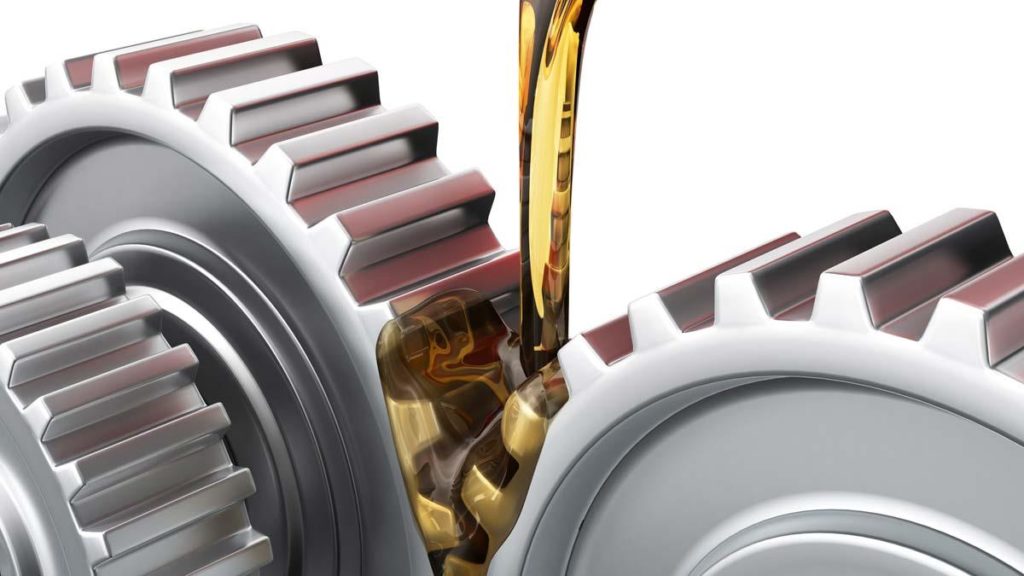
How do lubricants reduce friction?

Post By: Saiful Izzuddin December 15, 2021 0 Comment

Material coating strategies to minimize friction have long been explored by design engineers. Could the reorganization of newly discovered materials minimize friction on macroscopic scales? 

FEIKEN Bearing will explain how lubricants can reduce the friction of bearings.

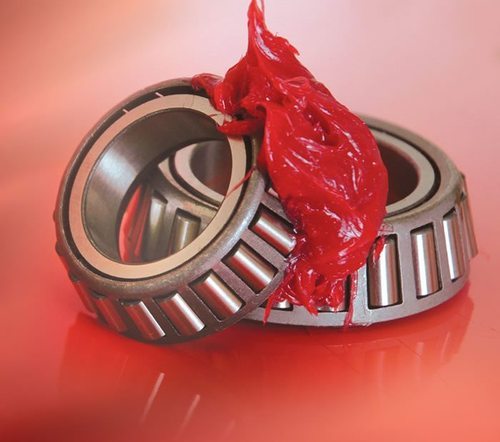
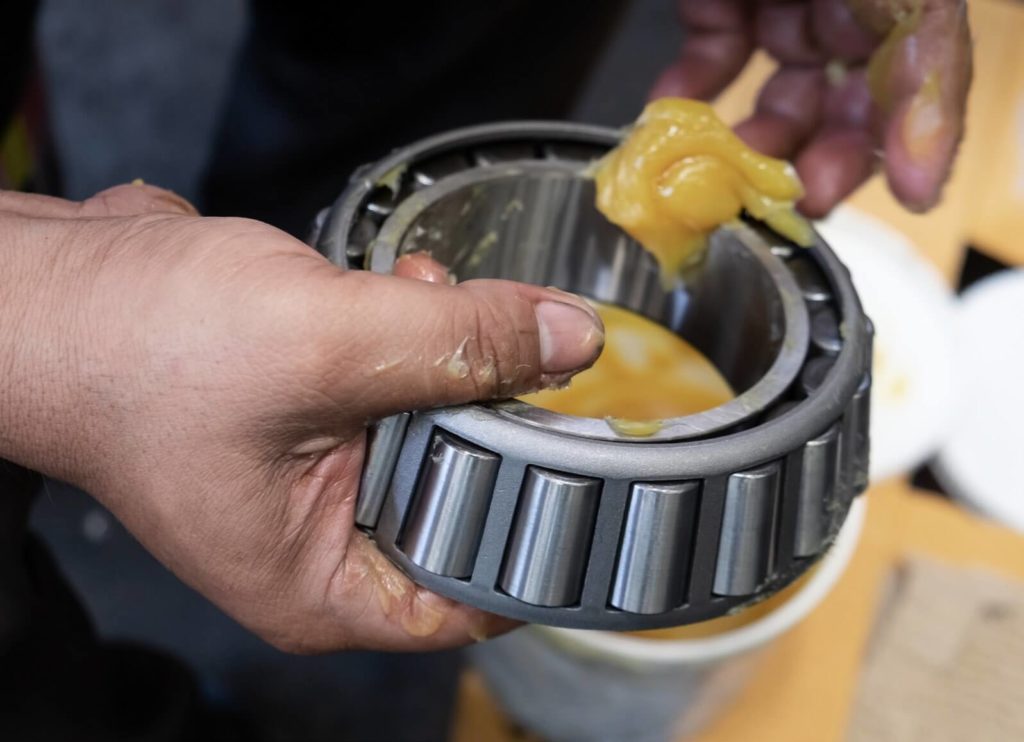
Bearing lubricant is necessary for effective bearing operation because it minimizes friction; if there is insufficient lubricant, it may cause bearing damage or failure, which eventually shortens the lifespan of a bearing.

Lubrication also prevents bearings and other wheel-end components from corrosion and pollutants that might harm them. Lubricants enhance the usable life of bearings to their maximum range when used correctly.

Wheel bearings can be damaged and fail over time due to contaminants such as water, salt, and organic waste.

Lubrication acts as a key barrier against these pollutants, ensuring that the bearing’s integrity is preserved. Leaking lubricant can let impurities into the bearing and cause failure if bearing seals become loose, pierced, or otherwise damaged by debris.

Read More

Tapered Roller Bearing

Post By: Saiful Izzuddin December 7, 2021 0 Comment

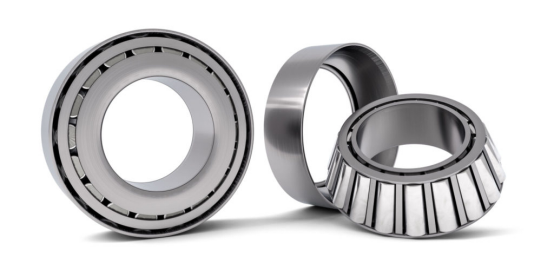
Tapered roller bearings have been around since the early twentieth century and continue to be popular, efficient roller bearings for a variety of applications. They can withstand multi-directional loads and run at high speeds. Tapered roller bearings concentrate combined loads on a single rotating axis. They allow radial and axial loads to act on the bearing assembly at the same time. The tapered roller bearings’ axial load-bearing capacity rises as the raceway contact angles increase—their conical form results in reduced overall stress on the interface elements. Tapered roller bearings are utilised in a variety of applications, including motor shafts, axles, and propellers.

Pros

Tapered roller bearings have numerous advantages. To begin with, the roller is tapered and inclined between the cups and cones, it can readily withstand a wide range of directional loads. It outperforms spherical, cylindrical, and needle roller bearings in the capacity to withstand combined heavy thrust and radial stresses. Without modification, most conventionally installed tapered roller bearings can withstand pure radial, pure axial, and any combination of those two types of stress conditions.

Because the shape of the tapered roller bearing provides real rolling motion of the roller between the raceways, the rollers are unlikely to skid or slide when unloaded. Other roller bearings feature low load requirements to ensure that the roller rolls rather than slides between the raceways. Skidding or sliding is dangerous because it sweeps lubricant away from the surfaces, causing wear and early failure.

Tapered roller bearings can withstand large loads. These capabilities greatly surpass the restrictions of ball bearings and compete with equivalent spherical roller bearing capacities.

Cons

However, it is necessary to keep in mind that tapered roller bearings have a few drawbacks. Tapered roller bearings are prone to dynamic misalignment. Spherical roller bearings tolerate dynamic misalignment significantly better due to raceway and roller geometry. Tapered roller bearings have static misalignment constraints as well, although in some cases, the bearing housings can be built so that the bearing can appropriately self-align.

Another issue is the limitation of speed. Although tapered roller bearings may run at high speeds, ball bearings can outperform tapered roller bearings and emit less heat at higher speeds. Many tapered roller bearings come as mounted units, such as pillow blocks, flanges, guided flanges, and take-up units. These mounted devices are frequently pre-lubricated and come with a selection of seals to suit a wide range of applications. These mounted units’ cones are particularly designed for rapid bearing-to-shaft assembly by setscrew, tapered adapter, eccentric locking, or clamp-style attachments.

Tapered roller bearings are also often available in unitized forms, which allow for misaligned expansion. Tapered roller bearing assemblies installed within a housing with a spherical outer diameter or rib are examples of unitized arrangements. These components are then put together in a flange or pillow block. The unitized bearing assembly swivels relative to the anchored bearing housing, comparable to a ball-and-socket joint. Common designs allow for a static angular misalignment of up to 4°. These unitized assemblies can also be expanded to prevent preload from thermal shaft growth or contraction.

Tapered roller bearings are widely used in a variety of applications. Tapered roller bearings are used in gearboxes and gear sets, particularly those that employ helical gears, because of their improved performance with multi-directional loads. Fans subjected to strong axial pressures, agricultural equipment, mining and aggregate machinery, aggressive machines used with wood goods, forest and paper products, and typical industrial applications all require mounted tapered roller bearings.

Read More

Spherical Roller Bearing

Post By: Saiful Izzuddin December 6, 2021 0 Comment

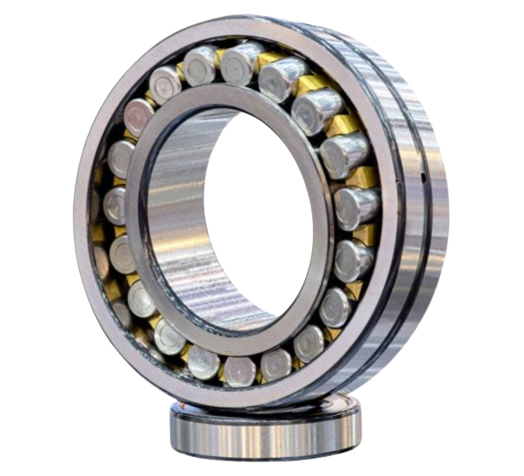
Spherical roller bearings have two rows of friction-reducing barrel-shaped rollers positioned between an outer ring with a spherical racetrack and an inner ring with two inclined raceways. These bearings are recognised for their capacity to correct for misalignment and shock loads as a result of their raceway designs, and they are utilised in a wide range of heavily loaded industrial applications.

The efficiency of a spherical roller bearing in a specific application is determined by a number of factors:

Speed restriction

The rotational speed at which the heat generated by rotation equals the heat exhausted by the lubricant and bearing geometry is referred to as the permitted speed.

Minimum load

The application’s minimal load. The bearing must have a minimal axial load transmitted to the rollers in order to function at high speeds with smooth acceleration and deceleration. This protects the cage from damage caused by inertial forces as well as sliding or excessive friction. The needed minimum load can be reduced by using high-quality lubricant.

Heating operating

The operating temperature is the temperature range in which the bearing performs most reliably. Lubricant thickness rises in low-temperature situations, necessitating a greater minimum load. If heat treatment action is undertaken on the bearing materials, the working temperatures for spherical roller bearings are very high.

Read More

Deep Groove Ball Bearing

Post By: Saiful Izzuddin December 3, 2021 0 Comment

Deep groove ball bearings are the most commonly used bearings in the industry, consisting of an outer ring, an inner ring, bearing cages, balls, and seals. Deep groove ball bearings come in single and double row configurations. Ball bearings with a single row are the most common type of rolling bearing. They have a basic design, are non-separable, and are excellent for high-speed operation, requiring minimum maintenance.

The amount of clearance between the inner ring, outer ring, and balls is referred to as bearing clearance.  Because clearance affects bearing life and rotation speed, you must choose appropriate clearances for different situations.  Clearance is divided into four types according to international standards. Small clearance (C1/C2), Normal clearance (C0), Bigger clearance (C3), and Big clearance (C4/C5) bearings can be manufactured according to customer clearance requirements.

Industries that use deep groove ball bearing:

• Home Appliances
• Machine Tools
• Wind Energy
• Construction Equipment
• Mining
• Office Equipment
• Agricultural Machinery
• Engineering Machinery
• Gearboxes
• Medical Tools

Bearings with shields are available, and seals can be supplied with the proper amount of grease and used in temperatures ranging from -30 to +110 degrees Celsius. Special bearings have a wide range of applications. Shielded and sealed bearings are designed for applications where the inner ring rotates and do not require relubrication in service. There is a possibility of lubrication loss if the outer ring rotates, and the manufacturer should be consulted. Deep groove ball bearings are available in a wide range of sizes, materials, and variations to meet the needs of different industries, including high-temperature applications. Bearings designed for high temperatures can endure temperatures of up to 350 degrees Celsius.

Advantages:

Minimize operation’s noise level. Because of the greater quality of balls, optimum surfaces, and cage stability, deep groove ball bearings are quieter in operation. They function flawlessly.

Lower friction offers low operational energy costs. Surfaces, waviness, and roundness are optimised to reduce bearing friction. Longer life is carried out to reduce friction.

Improved sealing enables more effective pollution protection. Deep groove ball bearings with seals on both sides are greased with a high-quality grease that is lubricated for lifetime and can withstand high speeds. They are quite effective at sealing and keeping pollutants out.

Reduced lubricant loss results in longer bearing life. Deep groove ball bearings loaded with special greases for specific applications and operating conditions.

Read More

Bearing Types and Their Applications

Post By: Saiful Izzuddin December 1, 2021 0 Comment

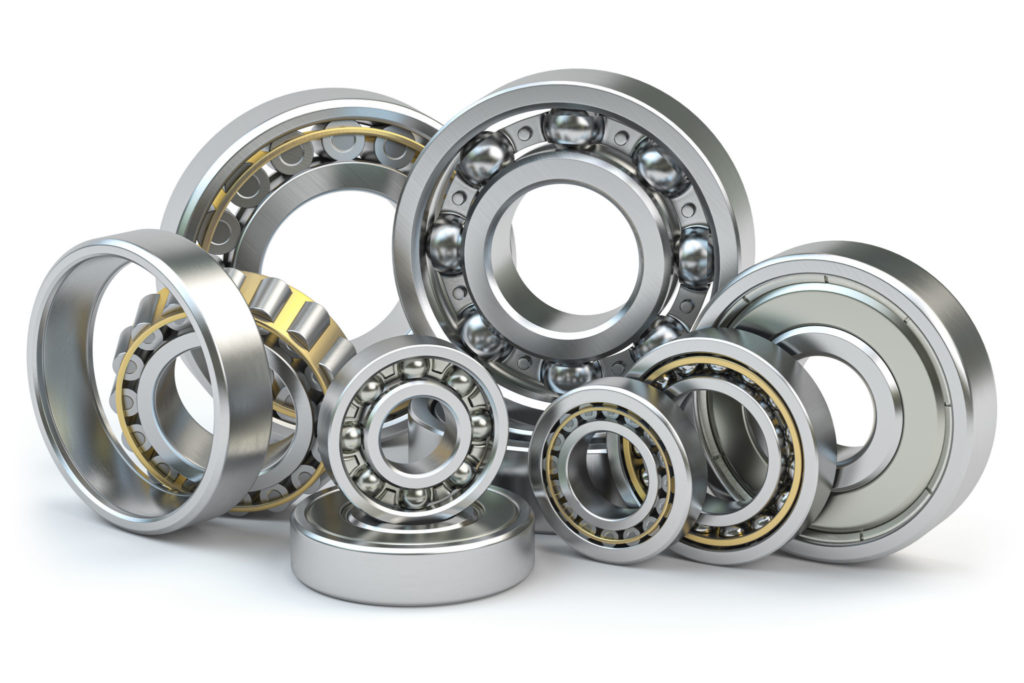
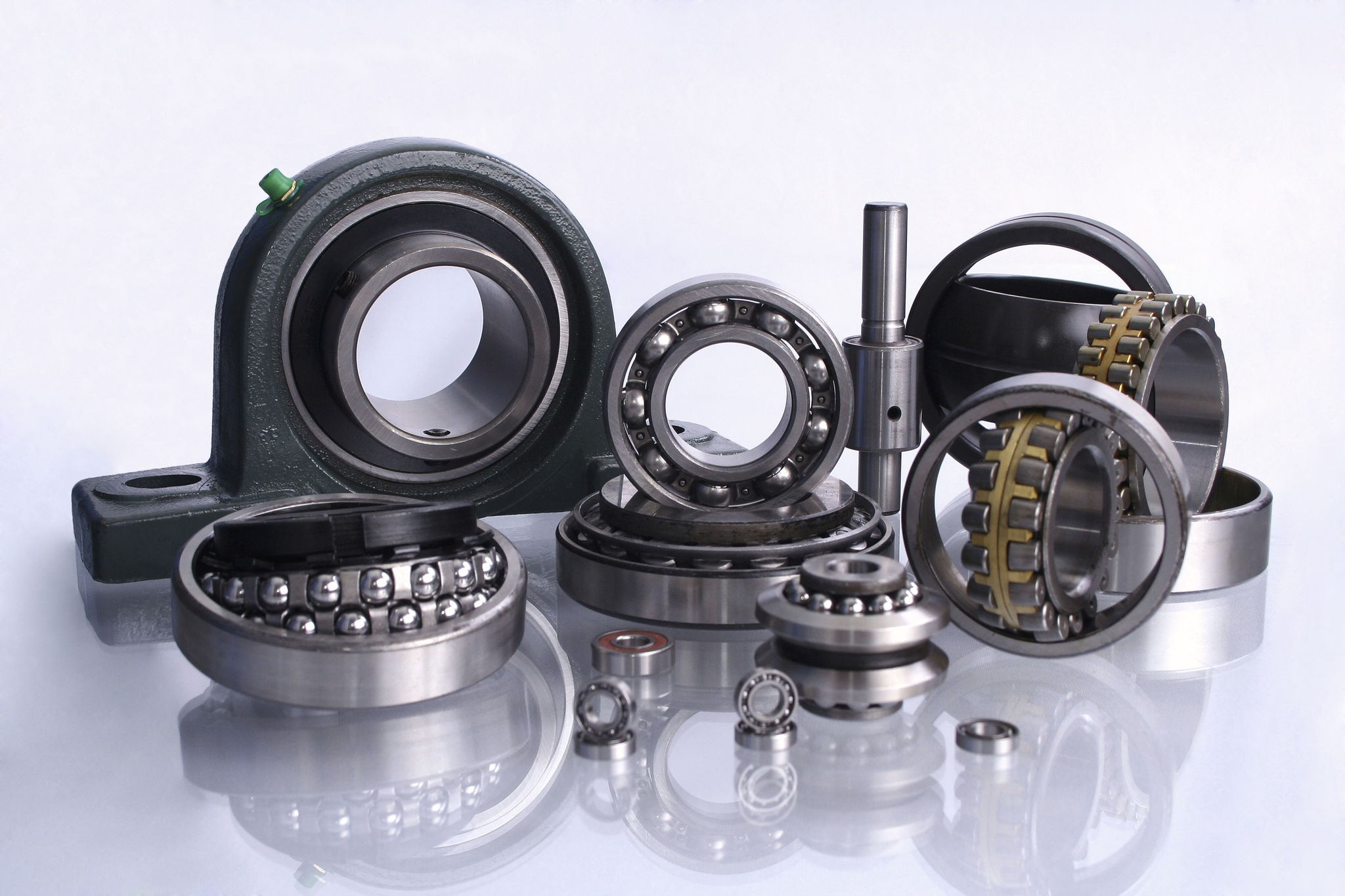
Bearings are the most essential element of industrial machines and motors. Bearings minimise friction between two rotating and linear pieces of equipment, increasing speed and efficiency. Bearings are classified based on their use, operation, load direction to equipment, and movements. Let us talk about the bearing category.

Roller Bearing

Roller bearings are another type of common bearing that is usually utilized in the industrial sector. It can carry more radial load than other standard types of bearings. Between the gaps of two radial faces, a roller bearing was utilised instead of a ball. Whereas a ball bearing produces point contact, this bearing roller makes line contact. Because of the roller, it gives greater precision and performance over time.


Roller bearings are preferred for:

– Operation at high speeds.
– Minimal lubrication is required.
– Longer lifespan.

Ball Bearing

Ball bearings are the most frequently used and popular form of bearing. This type of bearing can withstand both thrust and radial loads. It lowers rotating friction and improves application performance. Ball bearings have two races that contain balls that transmit loads. Because of the tiny contact surface between races and balls, it has a reduced load capacity bearing. It is less costly and can be constructed of stainless steel or chrome steel. In hybrid bearings, ceramic balls and metal races are employed.

Thrust Bearing

Thrust bearings are rotary bearings that allow single or multiple elements to rotate. They are developed specifically for axial loads. There are several types of thrust bearings available for use in industrial and automotive applications.


We reviewed the two basic types of thrust bearings in this section.

– Roller thrust bearing.
– Ball thrust bearing.

Tapered Roller Bearing

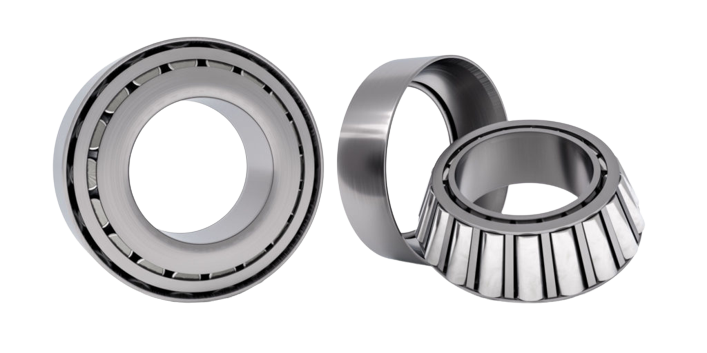
Tapered roller bearings can withstand high radial and thrust loads. They are made up of a cup and cone assembly, inner and outer rings, and a tapered roller. They are commonly used in automotive hubs because they can withstand a wide range of loads. They are most typically utilised in heavy duty applications where moderate speeds and durability are required. The bearing’s contact angle varies according to the loading ratio. Tapered roller bearings have a long life, are dimensionally stable, and have a strong steel cage.

Needle Roller Bearing

A needle roller bearing is surrounded by a cylindrical roller. It is most typically found in the motorcycle’s chain drive system, crankshaft, and chassis, allowing for simple movement with the ease of loads. The needle roller bearing size is small and takes up little space when fitted. This bearing can withstand large radial loads. This bearing makes the machinery smaller and lighter.

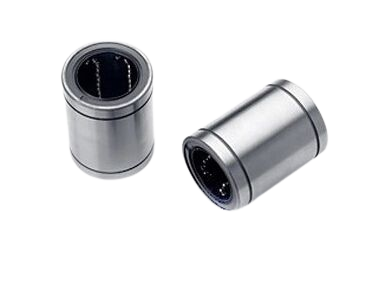
Linear Bearing

Linear bearings are intended to give linear or free motion in only one direction. They fit into the circular or square rail. These bearings are often found in automotive and industrial machines. They are capable of carrying huge weights.


They are available in two varieties:

– Roller slides.
– Ball slides.

Ball Bush Bearing

A ball bush bearing is a type of bearing that has a cylindrical shaped housing with a pair of ball arrangements within. It only enables movement in one direction. It can be flange mounted, in which case the flange strongly grips the bearing. The application dictates whether flange or round rail is fitted. It is most widely utilised because of its low frictional resistance and improved movement precision.

Read More
  • Prev
  • 1
  • 2

Feiken Bearing

We offer high quality product with factory price to help customers to save cost.

Multi Vendor Marketplace WordPress Theme

contact info

  • 67-G, Petaling Utama Avenue,
    Jalan PJS 1/50, Taman Petaling Utama,
    46150 Petaling Jaya, Selangor, Malaysia.
  • 03-7499 2789
  • admin@feikenbearing.com
  • Open Time: 9:00AM - 6:00PM

Signup for Newsletter

We’ll never share your email address with a third-party

© Feiken Bearing Sdn Bhd.

We use cookies on our website to give you the most relevant experience by remembering your preferences and repeat visits. By clicking “Accept All”, you consent to the use of ALL the cookies. However, you may visit "Cookie Settings" to provide a controlled consent.
Cookie SettingsAccept All
Manage consent

Privacy Overview

This website uses cookies to improve your experience while you navigate through the website. Out of these, the cookies that are categorized as necessary are stored on your browser as they are essential for the working of basic functionalities of the website. We also use third-party cookies that help us analyze and understand how you use this website. These cookies will be stored in your browser only with your consent. You also have the option to opt-out of these cookies. But opting out of some of these cookies may affect your browsing experience.
Necessary
Always Enabled
Necessary cookies are absolutely essential for the website to function properly. These cookies ensure basic functionalities and security features of the website, anonymously.
CookieDurationDescription
cookielawinfo-checkbox-analytics11 monthsThis cookie is set by GDPR Cookie Consent plugin. The cookie is used to store the user consent for the cookies in the category "Analytics".
cookielawinfo-checkbox-functional11 monthsThe cookie is set by GDPR cookie consent to record the user consent for the cookies in the category "Functional".
cookielawinfo-checkbox-necessary11 monthsThis cookie is set by GDPR Cookie Consent plugin. The cookies is used to store the user consent for the cookies in the category "Necessary".
cookielawinfo-checkbox-others11 monthsThis cookie is set by GDPR Cookie Consent plugin. The cookie is used to store the user consent for the cookies in the category "Other.
cookielawinfo-checkbox-performance11 monthsThis cookie is set by GDPR Cookie Consent plugin. The cookie is used to store the user consent for the cookies in the category "Performance".
viewed_cookie_policy11 monthsThe cookie is set by the GDPR Cookie Consent plugin and is used to store whether or not user has consented to the use of cookies. It does not store any personal data.
Functional
Functional cookies help to perform certain functionalities like sharing the content of the website on social media platforms, collect feedbacks, and other third-party features.
Performance
Performance cookies are used to understand and analyze the key performance indexes of the website which helps in delivering a better user experience for the visitors.
Analytics
Analytical cookies are used to understand how visitors interact with the website. These cookies help provide information on metrics the number of visitors, bounce rate, traffic source, etc.
Advertisement
Advertisement cookies are used to provide visitors with relevant ads and marketing campaigns. These cookies track visitors across websites and collect information to provide customized ads.
Others
Other uncategorized cookies are those that are being analyzed and have not been classified into a category as yet.
SAVE & ACCEPT
Close
Sign in Or Register
Forgot your password?

NEW HERE?

Registration is free and easy!

  • Faster checkout
  • Save multiple shipping addresses
  • View and track orders and more
Create an account
x
X
  • Menu
  • Home
  • Shop
    • Browse Our Products
  • About Us
  • Blog
  • Application
  • Contact Us
  • Careers